
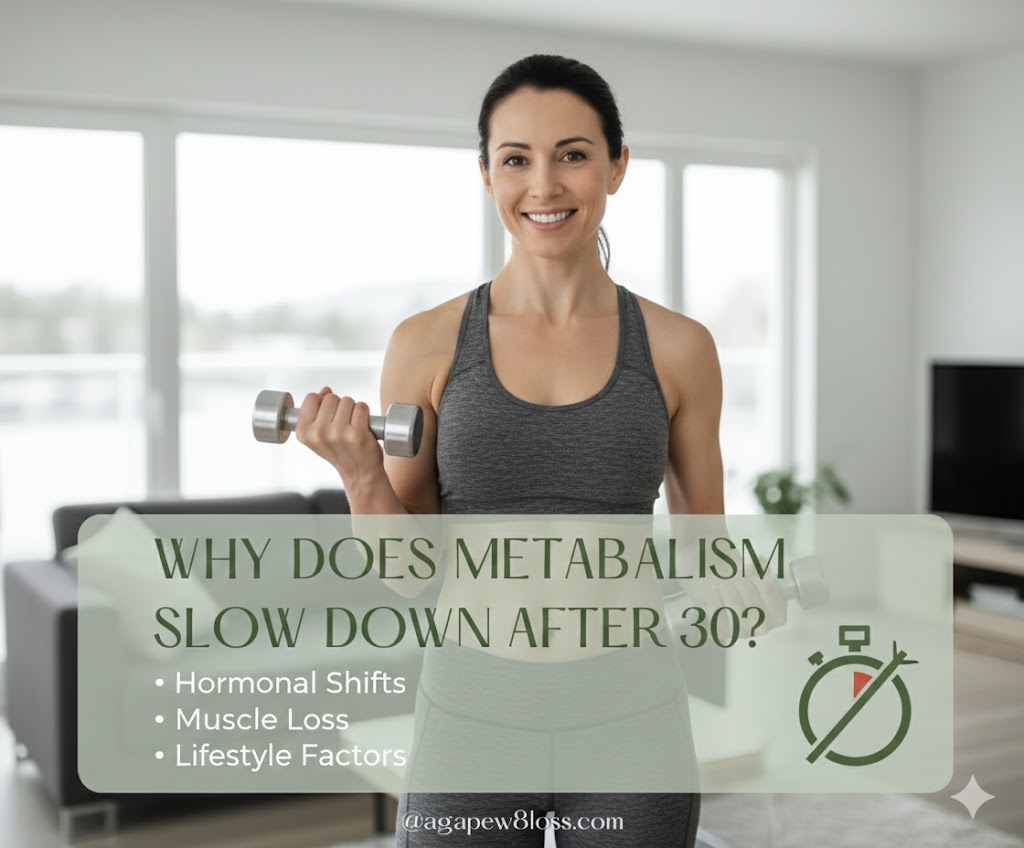
If you’ve crossed the age of 30 and noticed that maintaining your weight suddenly feels harder than it used to, you’re not imagining things. Many people experience gradual weight gain, lower energy levels, and slower fat loss as they enter their 30s and beyond. The common explanation? “Your metabolism slows down.”
But what does that really mean and why does it happen?
Let’s break down the real biological, hormonal, and lifestyle factors that contribute to metabolic slowdown after 30, based on current medical science.
What Is Metabolism, Exactly?
Metabolism refers to all the chemical processes in your body that convert food into energy. A major part of this is your basal metabolic rate (BMR) — the number of calories your body burns at rest to keep vital functions running, such as breathing, circulation, cell repair, and temperature regulation.
Your BMR accounts for 60–75% of total daily calorie burn, which means even small shifts can significantly impact weight over time.
Does Metabolism Really Slow Down After 30?
The short answer: Yes — but gradually.
Research shows that metabolic rate typically remains relatively stable through early adulthood, then begins to decline at an average rate of 1–2% per decade after age 30. While this drop may seem minor, its cumulative effect over several years can noticeably influence body composition.
What’s more important than age alone are the physiological changes that occur alongside aging.
1. Loss of Lean Muscle Mass (Sarcopenia)
One of the biggest contributors to metabolic slowdown is age-related muscle loss, known medically as sarcopenia.
Muscle tissue is metabolically active, meaning it burns more calories than fat, even at rest. Starting in your 30s, adults naturally begin losing muscle mass unless they actively work to preserve it.
- Average muscle loss: 3–8% per decade after 30
- Lower muscle mass = lower resting calorie burn
This explains why people who maintain the same eating habits often start gaining weight in their 30s — their bodies simply require fewer calories than before.
2. Hormonal Shifts That Impact Fat Storage
Hormones play a critical role in regulating metabolism, appetite, and fat distribution. After 30, several hormonal changes begin to occur.
In Women:
- Declining estrogen levels affect insulin sensitivity and fat storage.
- Increased tendency to store fat around the abdomen.
- Perimenopausal changes may start earlier than many expect.
In Men:
- Testosterone levels begin to decline about 1% per year after 30.
- Lower testosterone reduces muscle mass and metabolic efficiency.
Both scenarios shift the body toward greater fat storage and lower calorie burn.
3. Reduced Physical Activity Levels
Lifestyle changes often coincide with adulthood milestones — career demands, family responsibilities, longer work hours, and increased stress.
Compared to their 20s, adults in their 30s and 40s typically:
- Move less
- Sit more
- Exercise less frequently
This reduction in non-exercise activity thermogenesis (NEAT) — calories burned through everyday movement — can dramatically affect total daily energy expenditure.
Even small decreases in daily movement can result in hundreds of fewer calories burned per day.
4. Changes in Insulin Sensitivity
As people age, insulin sensitivity gradually decreases, meaning the body becomes less efficient at processing carbohydrates.
This can lead to:
- Higher blood sugar spikes
- Increased fat storage
- Greater difficulty losing weight
Poor insulin sensitivity also makes it easier to gain fat even without eating more calories.
5. Chronic Stress and Elevated Cortisol
Stress tends to increase with age — and chronic stress elevates cortisol, a hormone strongly linked to abdominal fat accumulation.
High cortisol levels:
- Increase appetite
- Promote fat storage, particularly in the midsection
- Interfere with normal metabolic function
Long-term stress alone can significantly contribute to metabolic dysfunction and stubborn weight gain.
6. Sleep Quality Declines
Sleep often becomes more fragmented after 30, especially for parents and professionals with demanding schedules.
Poor sleep:
- Disrupts hunger hormones (ghrelin and leptin)
- Increases cravings for sugar and processed foods
- Slows fat metabolism
Even mild chronic sleep deprivation can lead to meaningful metabolic decline.
Is Metabolic Slowdown Inevitable After 30?
Not entirely.
While aging does influence metabolism, lifestyle choices have a far greater impact than age alone. Many people maintain strong metabolic health well into their 40s, 50s, and beyond by protecting muscle mass, managing hormones, and staying physically active.
In fact, studies show that individuals who consistently strength train and maintain high daily activity often retain metabolic rates comparable to much younger adults.
How to Prevent or Reverse Metabolic Slowdown
1. Prioritize Resistance Training
Strength training preserves muscle mass, increases resting calorie burn, and improves insulin sensitivity.
2. Increase Daily Movement
Walking, standing, stretching, and movement throughout the day matter just as much as workouts.
3. Optimize Protein Intake
Adequate protein supports muscle maintenance, satiety, and thermogenesis.
4. Improve Sleep Hygiene
Consistent sleep schedules and quality sleep dramatically support metabolic health.
5. Manage Stress Levels
Mindfulness, exercise, breathing techniques, and adequate recovery can lower cortisol.
6. Address Hormonal Health
Medical evaluation can identify hormonal imbalances that may hinder metabolism.
The Bottom Line
Metabolism does slow down after 30 but not suddenly, and not beyond your control.
The shift is driven primarily by muscle loss, hormonal changes, reduced activity, stress, and sleep disruption. With targeted lifestyle strategies, many people can not only prevent metabolic decline but even improve metabolic function well into midlife.
Aging changes the rules but it doesn’t eliminate your ability to win.